Fans put up support ads everywhere now — a billboard in their own city, a screen in Times Square, a bus back home. So when someone says "put it up in Seoul instead," it's fair to ask: what actually changes? Is it worth it? And can I even do it from abroad?
Here's the short version, in three questions fans ask most: what's different, what it costs, and whether you can run it from your country.
1. Your city vs Seoul: what actually changes
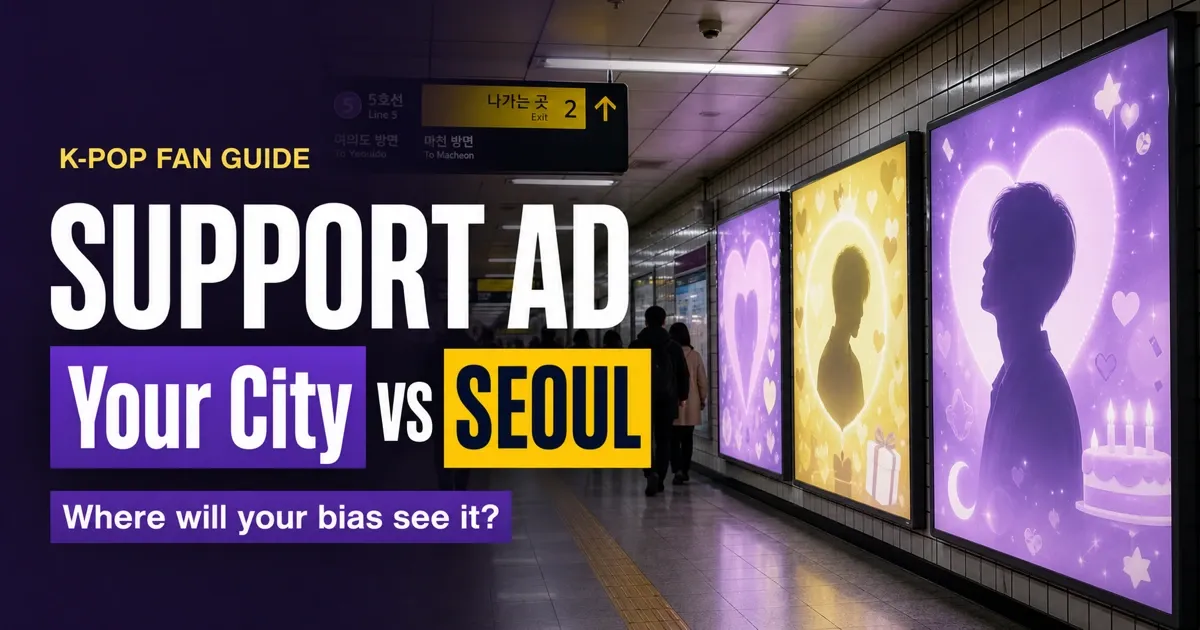
Neither one is "wrong." But the meaning is different. A support ad in Seoul goes up in the city where your bias actually lives and works — not just the city where you do.
| Compare | Your city (LA / NYC / London) | Seoul, Korea |
|---|---|---|
| Who sees it | Local fans and passers-by | Korean fans, the industry, your bias's daily routes |
| Chance your bias sees it | Only if they visit | Higher — it's where they live and work (near agencies, stations) |
| What it means | "Our city has an ad for them" | "Their name is up in the home of K-pop" |
| After it ends | Gone; seen by strangers | Becomes a spot other fans travel to and photograph |
2. What it costs
Price in Korea mostly comes down to medium, location, and duration. The ranges below are rough guides, not fixed prices (check the product page for the real number). For a feel: 1,000,000 KRW ≈ about US$650.
| Medium in Korea | Rough range | Min. period | Best for |
|---|---|---|---|
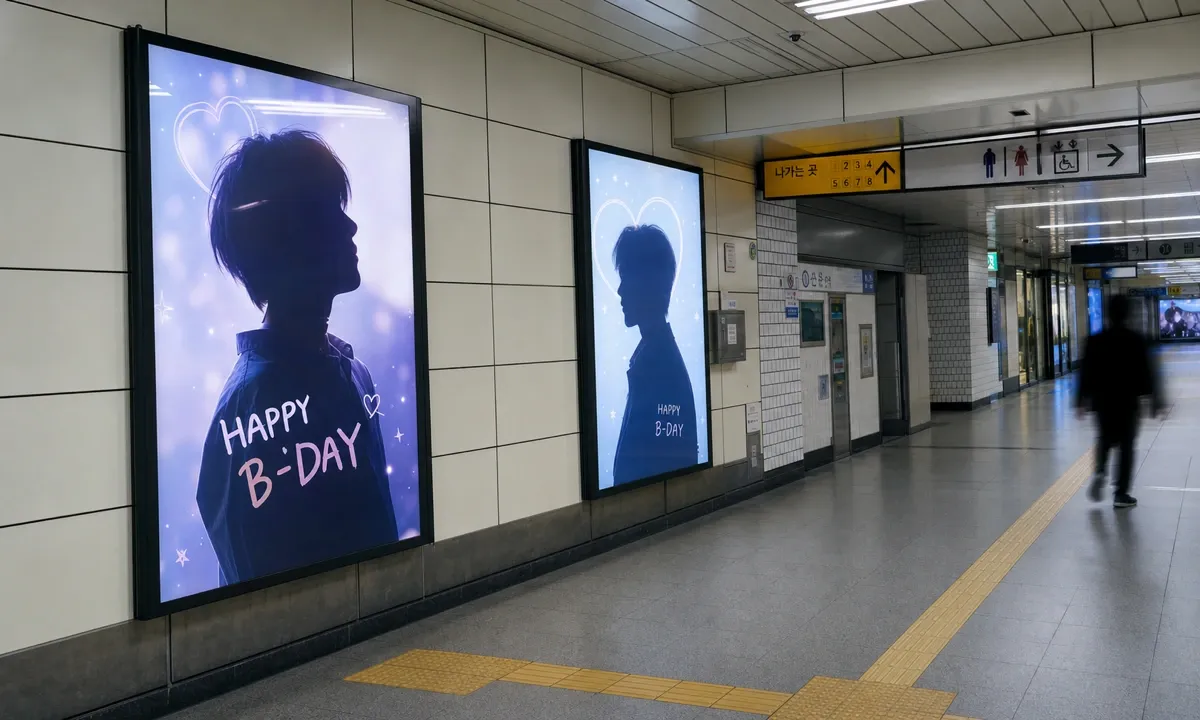
| Station lightbox / poster | ≈ US$1,000–4,600 / month | 15 days–1 month | Classic, long run, high foot traffic |
| Station digital panel | From a few hundred USD / run | 15 days–1 month | Video, rotating slots |
| LED / digital billboard | Hundreds to thousands USD (by location) | From 7 days | Short, eye-catching (Hongdae, Gangnam) |
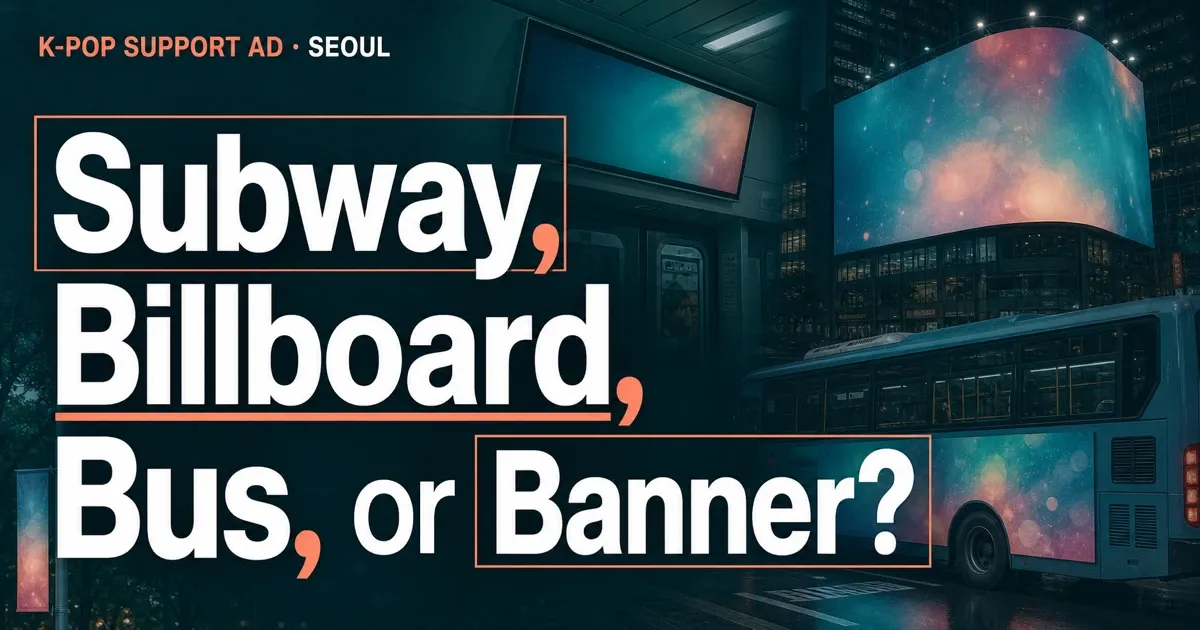
| Bus / banner | Flexible by route / spot | Varies | Targeting a specific route |
Why is booking direct in Korea cheaper? The more middlemen a request passes through, the more the costs stack up — agency fees, translation, separate design charges, currency spreads. Book with a team that's local and direct in Korea, and those layers shrink, so the price lands closer to the real cost of the media. It's not magic — it's just the structure of who's in the middle.
3. Can you run it from abroad? Yes — just know the hurdles
The things that make overseas fans hesitate are almost always the same: language, payment, and not being able to see it in person. Here's how each one gets solved.
| Where it gets stuck | How it's solved |
|---|---|
| Language (it's all in Korean) | A channel that handles it in English, so you don't translate anything |
| Payment / cross-border transfer | Everyone can pay their own share — no organizer fronts the whole amount |
| Can't fly over to check | You get confirmation photos from the on-site team — ready to post |
| File specs, sizes, rules | Each medium comes with a size / format guide to follow |
| "Is this a scam?" | Local and direct + everyone paying their own share lowers the risk |
4. Which medium should you pick?
There's no single "best" medium — only the one that fits your project. Pick by your main goal.
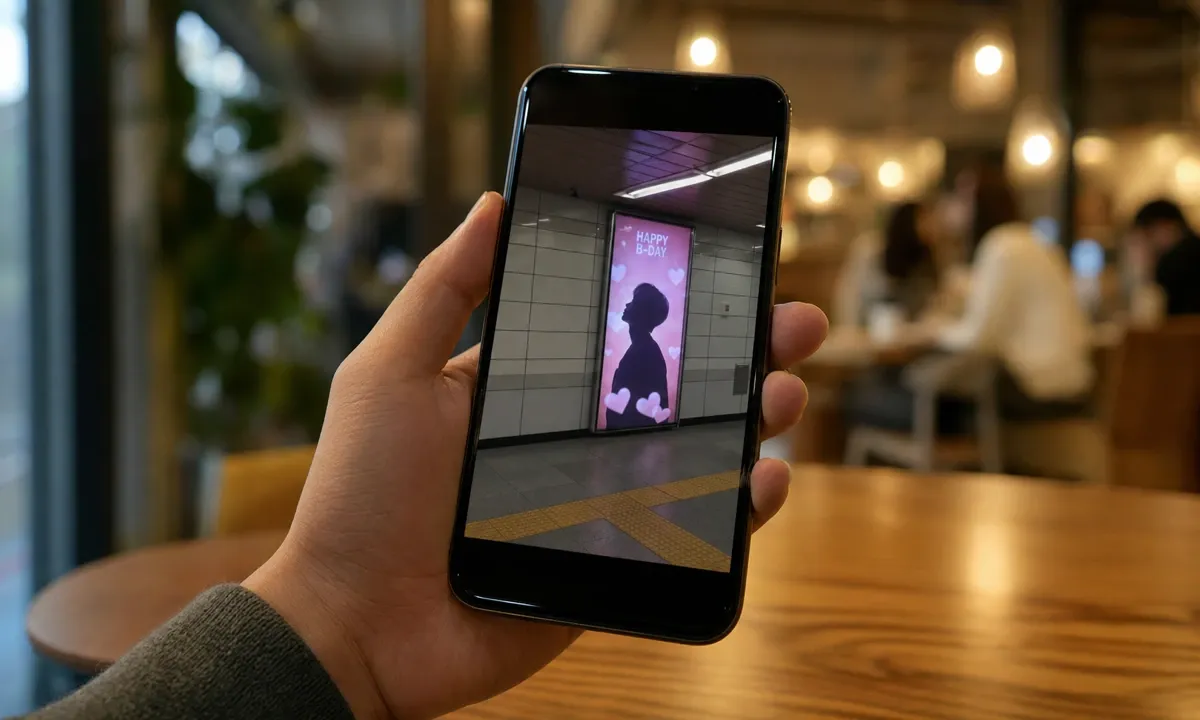
- 🚇 Long run, lots of foot traffic → subway station lightboxes & posters — the classic, and the most photographed
- 📺 Eye-catching, video, even short → LED / digital billboards in areas like Hongdae and Gangnam — from 7 days
- 🚌 Target a route or spot → buses and banners, flexible by path
5. Ready to put one up in Seoul?
Not sure where to start? The easiest first step is to browse the real media in Seoul, compare locations, prices, and durations, then decide — no rush to book. DUKPLACE is local and direct in Korea, so you can compare and reserve from your country, confirmation photos included.
Ready to put your bias's name up in Seoul?
Browse Korea support ad media — compare price & location
See all media →