
You've picked the date. You've worked out a rough budget. Then the next question lands: "Okay… but what kind of ad should it actually be?" Subway? A giant billboard? A bus? A street banner? They all sound exciting, and they all look completely different in real life.
Here's the good news: there's no single "best" one. The right medium is just the one that fits what you want this ad to do — and once you look at it that way, the choice gets a lot simpler. Let's walk through each option the way a fan actually experiences it.
Mia's note
Don't start from the format. Start from the moment you're trying to create — a spot fans can visit, a big comeback splash, or a simple, sweet hello. The medium follows from there.
Start from what you want your ad to do
Before comparing screens and sizes, ask one quiet question: who is this ad really for, and how will they meet it? For most support ads, the true audience isn't random commuters — it's other fans, online. That's why the hidden number-one factor is almost always the same:
📸 Can fans easily find it and photograph it? In Korea, fans tour ads like little destinations — visiting, taking photos, posting them, sometimes leaving flowers. An ad that's hard to photograph (too high, too crowded, only on screen for a few seconds) can feel like it "didn't happen," even if thousands walked past it.
Keep that in mind, then match your goal to a starting point:
A place to visit & photograph
You want a fixed, friendly spot fans can go to all week. → Subway
Big, loud, comeback energy
You have strong artwork or video and want scale. → Digital billboard
On the move / near a meaningful place
You want reach across the city, or a spot near somewhere special. → Bus
Simple, quick, budget-friendly
A short, sweet, low-cost hello near one area. → Banner
One more lens that quietly shapes everything: static vs. motion. Subway lightboxes, bus-shelter panels and banners hold a single still image (easy to photograph any time). Digital billboards and screens play video on a loop (great for impact, trickier to capture). Hold that thought — it comes back in every section below.
SUBWAY The spot fans visit and photograph
If you're not sure, subway is the classic first choice — and for good reason. It's indoors, well-lit, at eye level, and always on. Fans can drop by any day that week, snap a clean photo morning or night, and tag their friends. It's also the easiest medium to confirm from abroad: someone in Korea can visit and send you real photos of your ad in place.
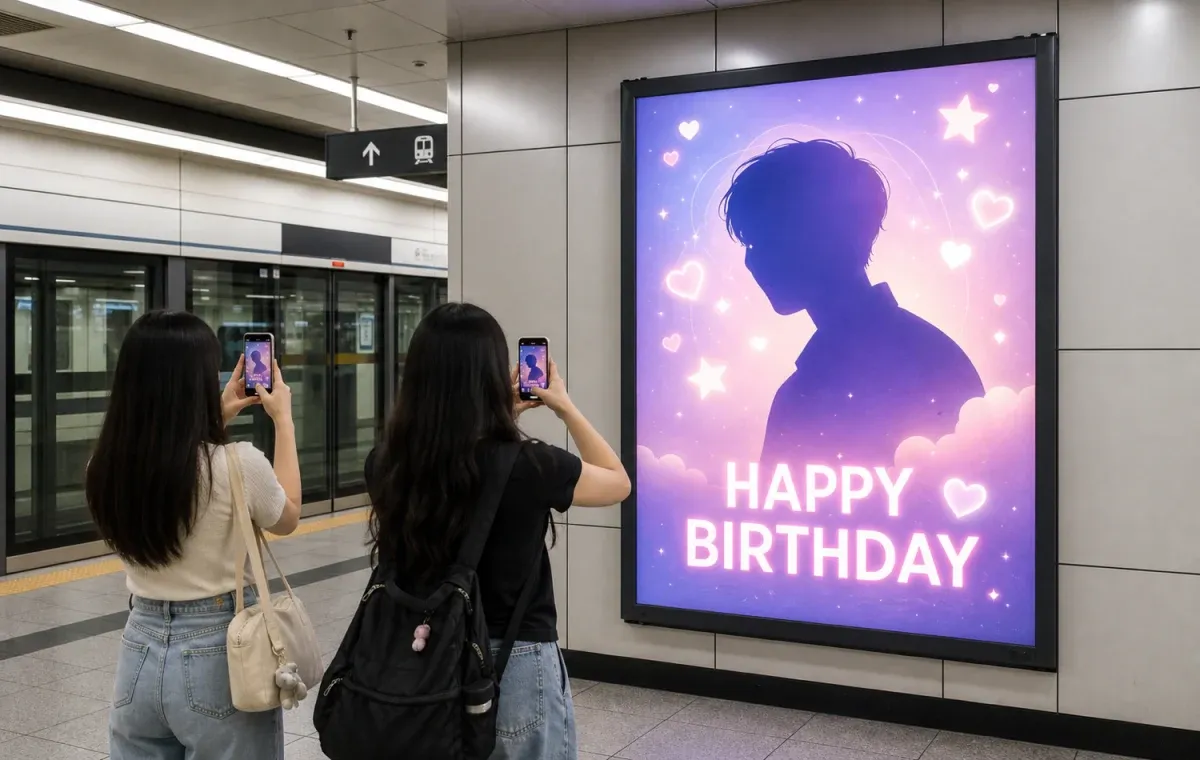
Within subway, you'll usually pick between two shapes:
Lightbox
The big, glowing backlit panel. Bold and photo-ready — the "centerpiece" look. Usually booked in roughly month-long blocks.
Poster
Smaller and simpler, often able to stay up longer. Nice for a calmer, lower-cost celebration that lingers.
💡 Mia's tip: the most famous station isn't automatically the best one. A slightly calmer station that fans can actually reach — and photograph without fighting a rush-hour crowd — often makes for nicer photos and a friendlier price. Pick the spot your fans can comfortably visit.
Best for: birthdays, debut anniversaries, and most first-time projects. → See subway support ad options in Korea
BILLBOARD Big, loud, made for a comeback
A giant digital screen is pure spectacle. It moves, it glows, it's made for video — perfect when you have a strong teaser or comeback visual and you want that "we got our bias on the big screen" moment. It's also a natural gathering spot and a fun online flex.
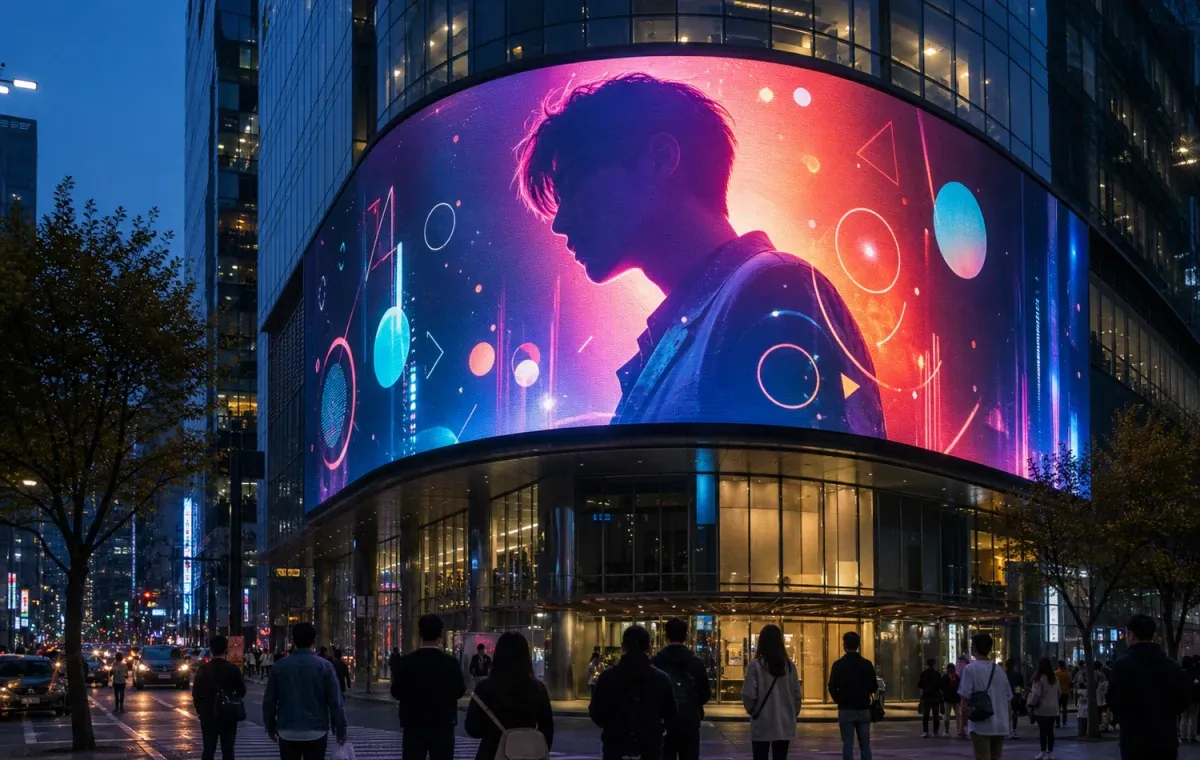
⚠️ One reality to plan for: on most big screens your design shares a rotating loop with other ads and clips. It plays for a short slot and comes back around through the day — it isn't a standalone wall that stays up non-stop. So plan to capture it as a short video at the right moment, and expect your confirmation to be a clip rather than a single still.
Best for: comebacks, chart wins, and milestone "flex" moments when you have eye-catching motion artwork. → See digital billboard options
BUS Street-level, on the move
Bus ads come in two very different flavors, and they suit different goals:
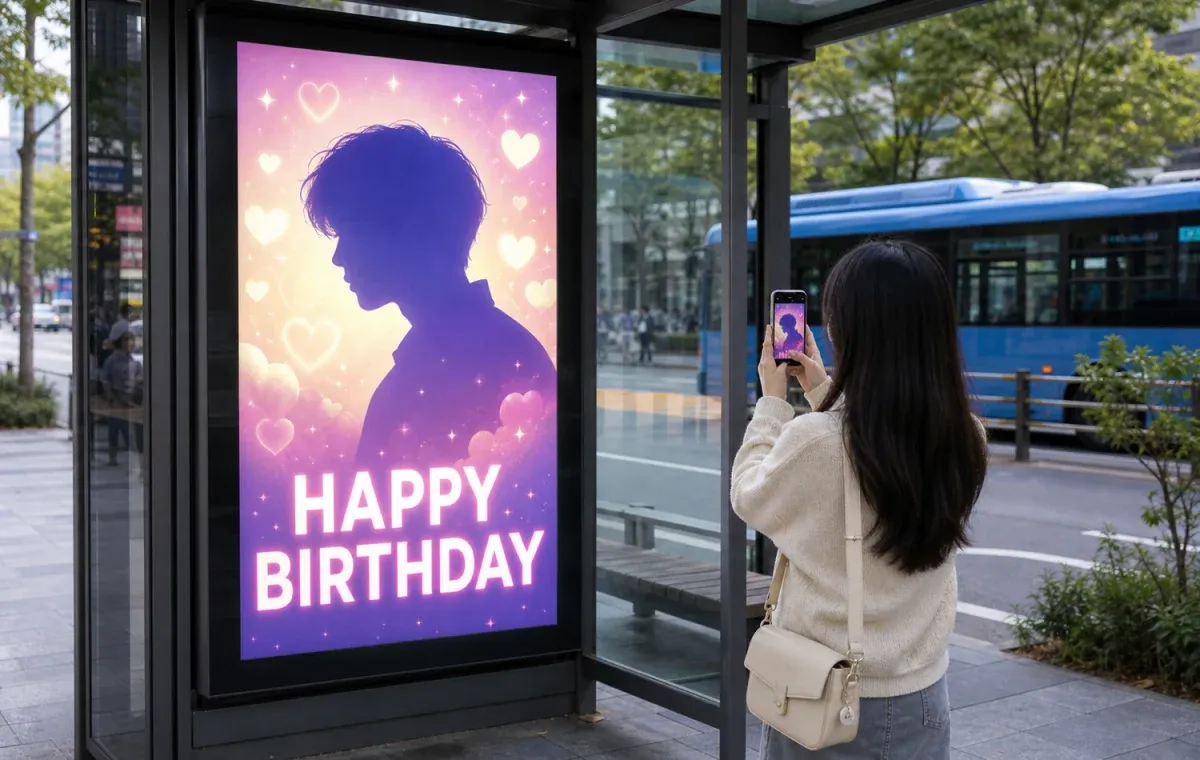
Bus-stop shelter
A lit panel built into the shelter — fixed and at eye level. Easy to find and photograph, and you can choose a spot near a meaningful place.
Bus wrapping
The whole bus, dressed up and driving routes across the city (often about 1–2 weeks). Big reach and a fun "spot the bus" hunt for fans.
💡 Keep in mind: a wrapped bus moves, so catching and photographing it depends on the route and timing. If you want something fans can reliably visit and shoot, the fixed shelter is the easier of the two to confirm.
Best for: reaching past meaningful areas, or a moving, eye-catching anniversary. → Bus-shelter options · Bus-wrapping options
BANNER Simple, quick — and a word on apartment ads
A street banner is the no-fuss option: a big, readable cloth banner on a designated street rack, usually up for a short, focused window (think around ten days). It's inexpensive, fast, and great for a clear "Happy Birthday" shout near one neighborhood.
⚠️ Worth knowing: banners are run by each district, so the rules vary — there are size limits, some background colors aren't allowed, and spots can be assigned by lottery or first-come. You may not land the exact rack you pictured, so stay flexible.
What about apartment elevator ads? You may have seen these — small screens inside residential elevators. They're built for repeat exposure to the people who live there, which makes them a local-business medium more than a fan one. They're indoors and private, there's no public spot for fans to gather and photograph, and they tend to run for longer commercial periods. For a fan celebration you want people to see and share, it's usually not the right fit — but it's good to know what it is.
Best for (banner): a short, sweet, low-cost celebration tied to one area. → See banner options
Quick recap: match your goal to a medium
| Your goal | Best medium | Why & what to watch |
|---|---|---|
| A spot fans can visit & photograph all week | Subway | Eye-level, always on, easiest to confirm from abroad. Pick a reachable station, not just a famous one. |
| Maximum impact for a comeback | Digital billboard | Scale + motion. But your slot rotates in a loop — capture it as a video. |
| Reach across the city / near a special place | Bus | Shelter = fixed & easy to photograph; wrapping = moving & wide reach, harder to catch. |
| Simple, quick, budget-friendly hello | Banner | Cheap and readable, but short runs and district rules (size, colors, lottery). |
Three things fans wish they'd known
- A billboard slot is short and on a loop. It's seconds at a time, repeating through the day — set expectations and plan a video capture, not a still.
- Famous isn't always better. A calmer, easy-to-reach spot can photograph beautifully and often costs less than the most in-demand location.
- Prime spots fill up. Popular stations and busy birthday seasons book out — plan early, or you may lose the spot (and dates) you really wanted.
Still deciding? See what's actually available
There's genuinely no wrong answer here — only the medium that fits your moment, budget, and the kind of memory you want to make. The easiest way to decide is to stop guessing and look at real spots side by side: actual stations, screens, and dates, with clear prices.
Booking directly with a local team in Korea makes that simple — you can compare real options, ask for an itemized quote in plain English, and get confirmation photos once it's up. Brand new to all of this? Start with the beginner's guide.
Note: ad formats, run lengths, approval rules, artwork specs, and local permit requirements vary by medium, station, and district — always check the current conditions before booking. Use only images, logos, fonts, and wording you have the right to use, and follow the artist's agency and rights owners' official guidance for any idol imagery.