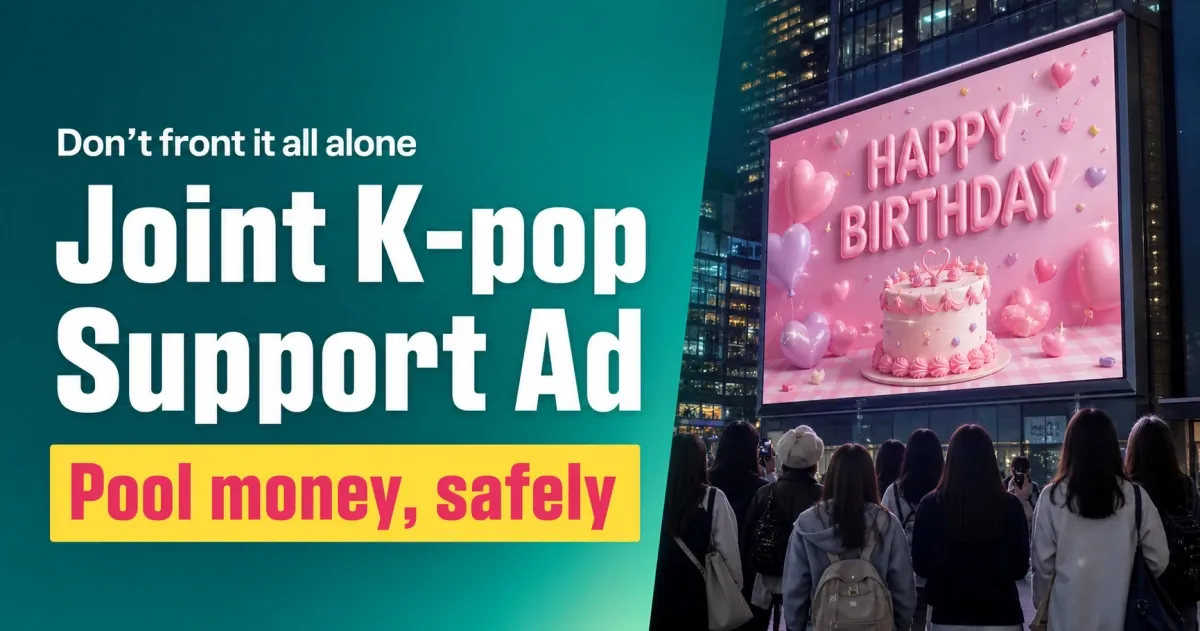
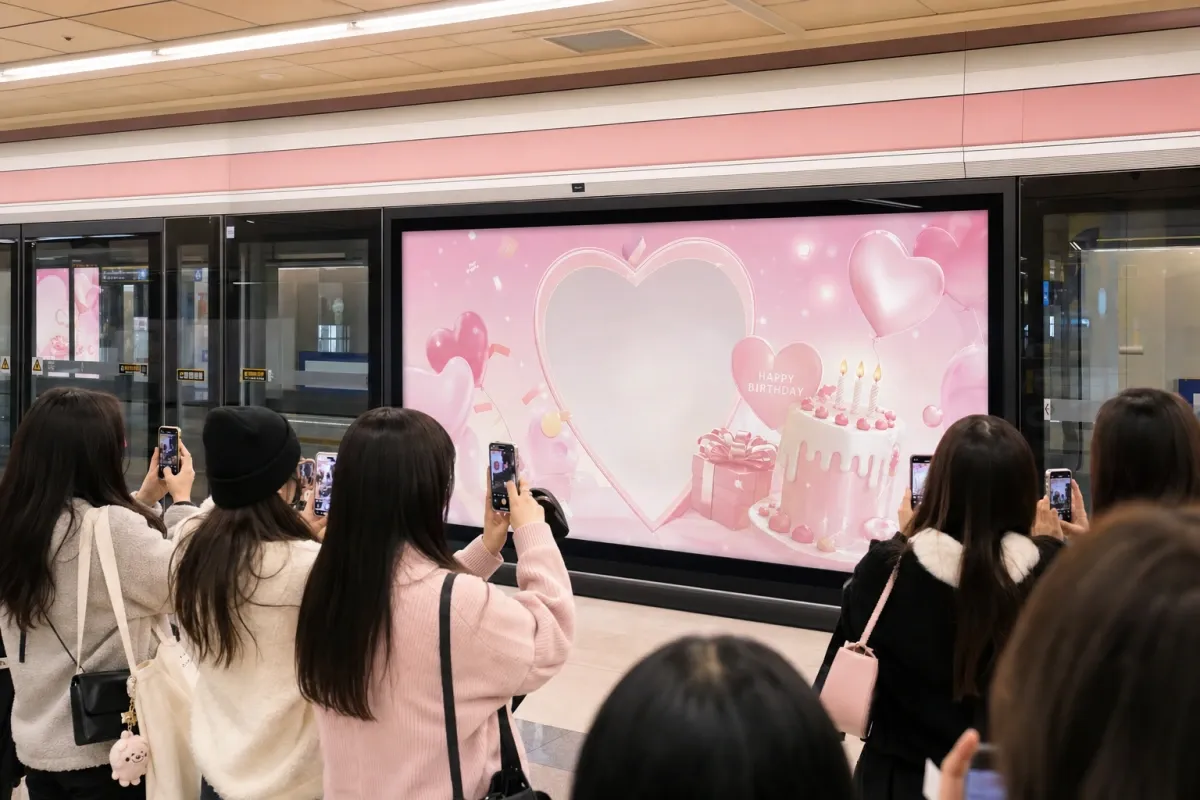
You've seen the photos: your bias's face lighting up a subway screen in Seoul, Korea, with fans crowding around to take pictures. And somewhere in the back of your mind, a small voice goes, "Could we actually do that? And who pays for it?"
Here's the good news. Most support ads aren't paid for by one person. They're a fan project — a group of fans who pool money together so no single person has to front the whole thing. If you've never done this before and the idea of collecting money from strangers makes you nervous, this guide is for you. We'll walk through how a joint ad actually works, and how to keep the money part safe and transparent from day one.
What a "joint" support ad really is
A joint (or group) support ad is exactly what it sounds like: several fans chip in toward one ad, instead of one person carrying the whole bill. One fan usually takes the lead — posting the plan, picking the spot, keeping everyone updated — but the cost is shared across everyone who joins.
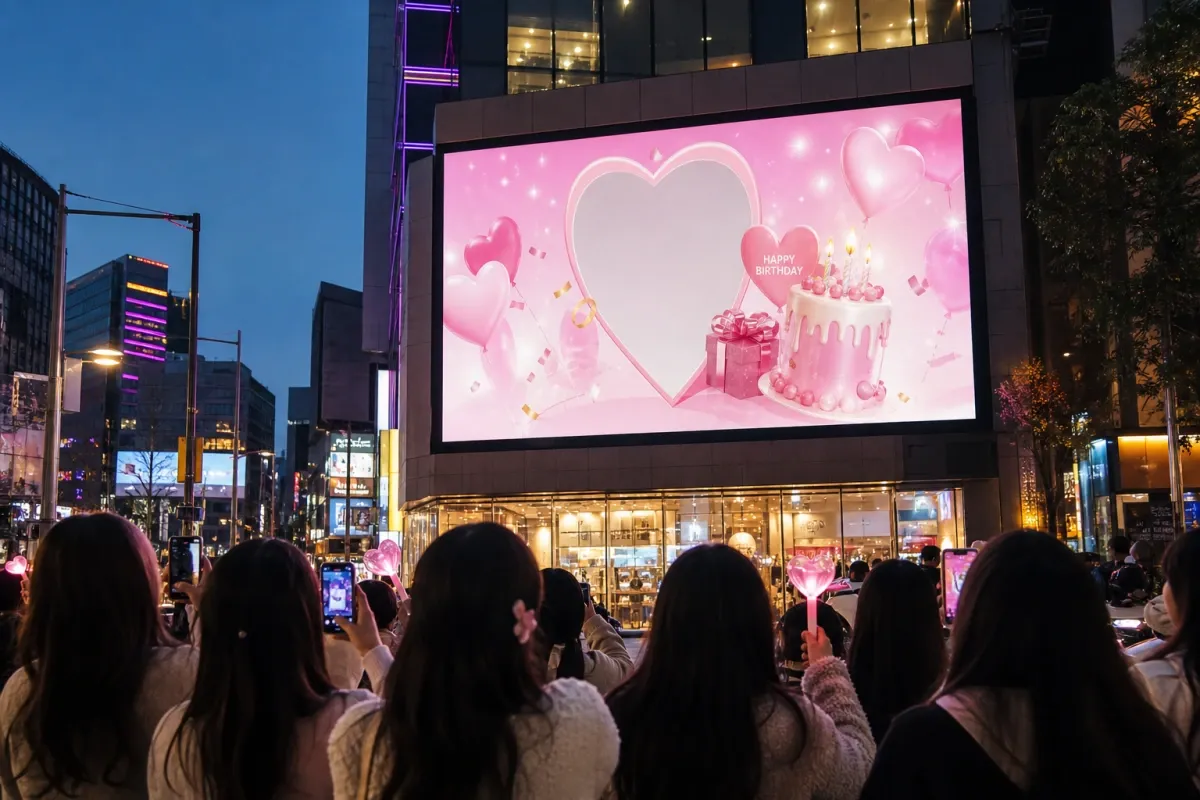
This is the normal way big spots get done. The most eye-catching places — a screen in a major Seoul station, a large city billboard — cost more precisely because they're seen by more people. Splitting the cost is what makes those spots reachable for a fandom instead of just a single wealthy fan.
You'll see fans say "let's pool money for a billboard," "I'll chip in $20," or call it a "fan-funded ad." It all means the same thing: everyone contributes their share, and together it adds up to one ad for your bias.
Why fans pool money — the math that makes it easy
The single biggest reason to go in together is simple: the more fans who chip in, the smaller each person's share. A spot that feels impossible for one fan becomes a few coffees' worth each when thirty or fifty people split it.
Here's the idea as plain shares (this is an illustration of how splitting works, not a real price):
| Fans chipping in | Each person's share of the cost | What it feels like |
|---|---|---|
| 10 fans | about 1/10 each | A nice dinner out |
| 30 fans | about 1/30 each | A couple pieces of merch |
| 50 fans | about 1/50 each | One photocard's worth |
There's a second reason the math works in your favor. Because we’re local and direct in Korea — no overseas middleman stacking fees on top — prices can run 1/2 to 1/5 of what an agency would charge, simply because there's no extra layer in between. A lower total means a lower target to hit, which means fewer fans needed and a smaller ask for each one.
The fear nobody talks about — and how to remove it
Let's name the thing everyone worries about: "What if we send our money to the organizer and they disappear?" It's a real fear, and there have been real cases in fandoms around the world where collected funds went missing. If you've hesitated to join a fan project because of this, you are not being paranoid — you're being sensible.
The structural fix is to not pool everything into one person's private account in the first place. With split payment, each fan pays their own share directly through the platform, so money never piles up in one organizer's bank account waiting to be misused. Everyone's payment is recorded, so the settlement is transparent instead of "trust me."
| The usual pain | How it's solved |
|---|---|
| Organizer fronts the full cost and loses out if the goal isn't met | Each fan pays their own share — no one carries the whole bill |
| Fear that the collector takes the money and vanishes | Money doesn't sit in a personal account; every payment is logged |
| Messy, "just trust me" settlement and arguments later | Clear payment records make the final tally easy to share |
| "Did the ad even run?" anxiety from far away | Local staff send confirmation photos showing your ad is actually up |
That last one matters more than people expect. When you're funding an ad from another country, you can't walk past the station to check. Getting a real photo of your ad in place — taken by someone on the ground in Korea — is the difference between hoping it worked and knowing it did.
A simple, safe way to run your joint ad
You don't need to be an accountant to do this well. A good joint ad follows the same gentle rhythm every time:
- Announce the plan first. Share the goal amount, the deadline, and which spot/medium you're aiming for before anyone pays. Fans love joining something that already has a clear shape.
- Let everyone pay their own share. Skip the "send it to my personal account" step entirely — pay through the platform so each contribution is on the record.
- Collect the supporter list. Names or handles for a thank-you board are part of the fun — and they keep everything tidy.
- Run the ad. The platform handles the booking, design specs, and local permits so you're not chasing paperwork in a country you may never have visited.
- Share the settlement. Post the final numbers and confirmation photos, and agree in advance on what happens to any leftover funds (extend the ad, donate, or refund).
Popular spots and big-anniversary seasons book up early, so reserve sooner than you think you need to. And agree on the refund rules up front: paying before the ad runs is normal, while a "changed my mind" refund after it's live is usually limited — so lock in the details before the ad goes up, then verify with the confirmation photos.
Ready to start your fan project?
A joint support ad isn't a leap of faith — it's a plan you can run with a clear head. Pool the money the safe way, let everyone pay their own share, and let the people on the ground in Korea handle the parts you can't see. What you're left with is the good part: your bias's name up in Seoul, and a fandom that pulled it off together.
Not sure where to begin? We'll help you plan it.
Browse support ad spots in Korea, see real prices, and split the cost with your fandom — no one has to front it all.
Explore support ads in Korea →When you use your bias's name or image in an ad, always follow the official guidance from their agency. Outdoor ad sizes and permits are handled and verified by the media platform, so you don't have to navigate local regulations yourself.